

Greetings to all!
Chemical Engineering, in essence, concerns the economic design and operation of chemical plants. The fundamentals of this discipline, drawn from physics, chemistry, mathematics and increasingly biology, are combined with engineering principles to understand and control molecular and macroscopic processes in diverse systems. Advancements in science and engineering help develop technologies that are more efficient, safer and environmentally friendly. The breadth and versatility of chemical engineering will continue to open many opportunities for future engineers.
The Department of Chemical Engineering was established in 1996 and currently offers a B.Tech. programme with an intake of 60 students. The department has qualified faculty, well-equipped laboratories, modern equipment and the Aspen ONE software for universities. The programme is approved by AICTE and has been accredited four times by the National Board of Accreditation (NBA), including five-year accreditation in 2012.
Our department is committed to providing quality education, promoting research, encouraging innovation and developing lifelong learning skills. We emphasize student-centred teaching, project work, industrial visits, internships, guest lectures and technical activities to prepare our students for a competitive professional environment.
The department works closely with the Training and Placement Cell to improve students' employability skills and career opportunities. Our alumni serve in reputed organizations, and our students actively participate in technical, co-curricular and extracurricular activities. We strive to nurture competent chemical engineers, innovative entrepreneurs and responsible professionals who contribute to industry and society.
On behalf of the department, I reaffirm our commitment to academic excellence, professional development and meeting the evolving needs of society.
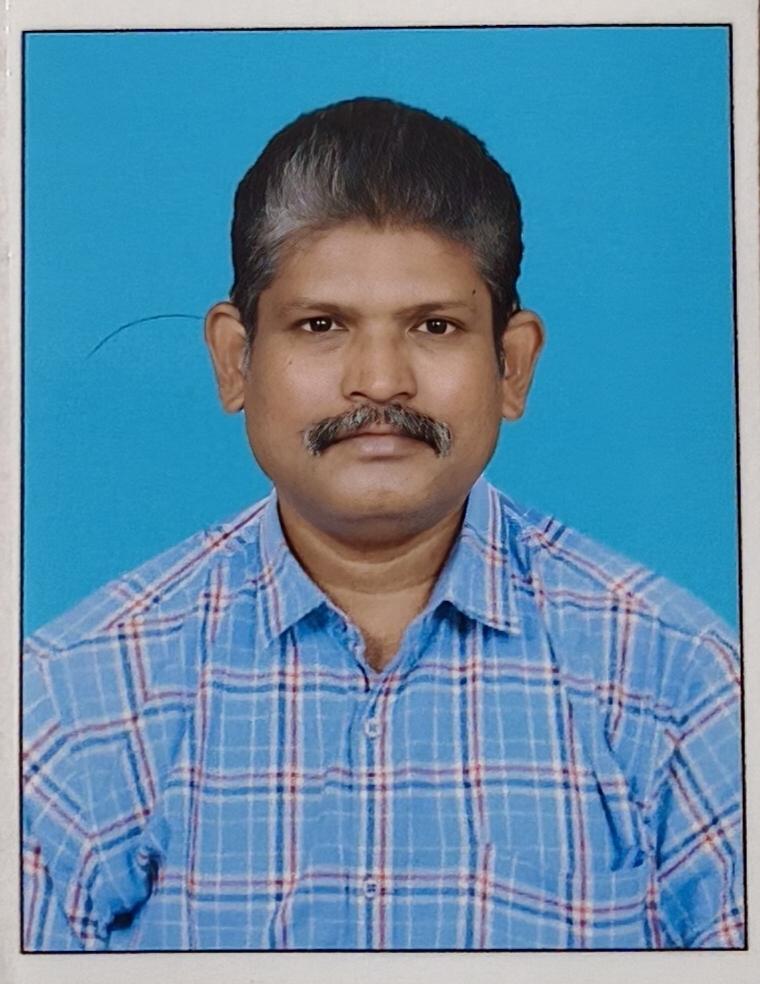
Dr. Ramesh Chandra Kolasani
Professor & HoD, Chemical Engineering
To develop a centre of academic excellence in the field of Chemical Engineering, capable of training chemical engineering professionals to cater to the needs of industry and society.
At the end of the programme, the student is enabled to:
| PSO | Description |
|---|---|
| PSO1 | Synthesize a conceptual chemical process by selecting operations, suitable equipment and conditions with proper control systems to produce products with required specifications. |
| PSO2 | Analyze the economics of process design and modify the process with the aid of process simulation to identify potential environmental impacts and safety concerns. |
| PO | Outcome |
|---|---|
| PO1 | Engineering Knowledge: Apply the knowledge of mathematics, natural science, computing and engineering fundamentals and an engineering specialisation to solve complex engineering problems. |
| PO2 | Problem Analysis: Identify, formulate and analyse complex engineering problems, reaching substantiated conclusions while considering the holistic nature of the problem. |
| PO3 | Design/Development of Solutions: Design creative solutions for complex engineering problems and design systems, components or processes to meet identified needs, considering public health and safety, cultural, societal and environmental factors. Sustainability is intrinsic to design. |
| PO4 | Conduct Investigations of Complex Problems: Conduct investigations of complex engineering problems using research-based knowledge and methods, including experimental design, data analysis and interpretation, and synthesis of information to provide valid conclusions. |
| PO5 | Engineering Tool Usage: Create, select and apply appropriate techniques, resources and modern engineering and IT tools, including prediction and modelling, recognising their limitations, to solve complex engineering problems. |
| PO6 | The Engineer and the World: Analyse and evaluate societal and environmental aspects while solving complex engineering problems, considering their impact on sustainability with reference to economy, health, safety, legal frameworks, culture and the environment. |
| PO7 | Ethics: Apply ethical principles and commit to professional ethics, human values, diversity and inclusion, and adhere to relevant national and international laws. |
| PO8 | Individual and Collaborative Team Work: Function effectively as an individual and as a member or leader in diverse and multidisciplinary teams. |
| PO9 | Communication: Communicate effectively and inclusively within the engineering community and society at large by preparing effective reports and design documentation, delivering presentations and considering cultural, language and learning differences. |
| PO10 | Project Management and Finance: Apply engineering management principles and economic decision-making to one's own work, as a team member or leader, to manage projects in multidisciplinary environments. |
| PO11 | Life-Long Learning: Recognise the need for and develop the preparation and ability for independent and lifelong learning, adaptability to emerging technologies and critical thinking in the context of technological change. |